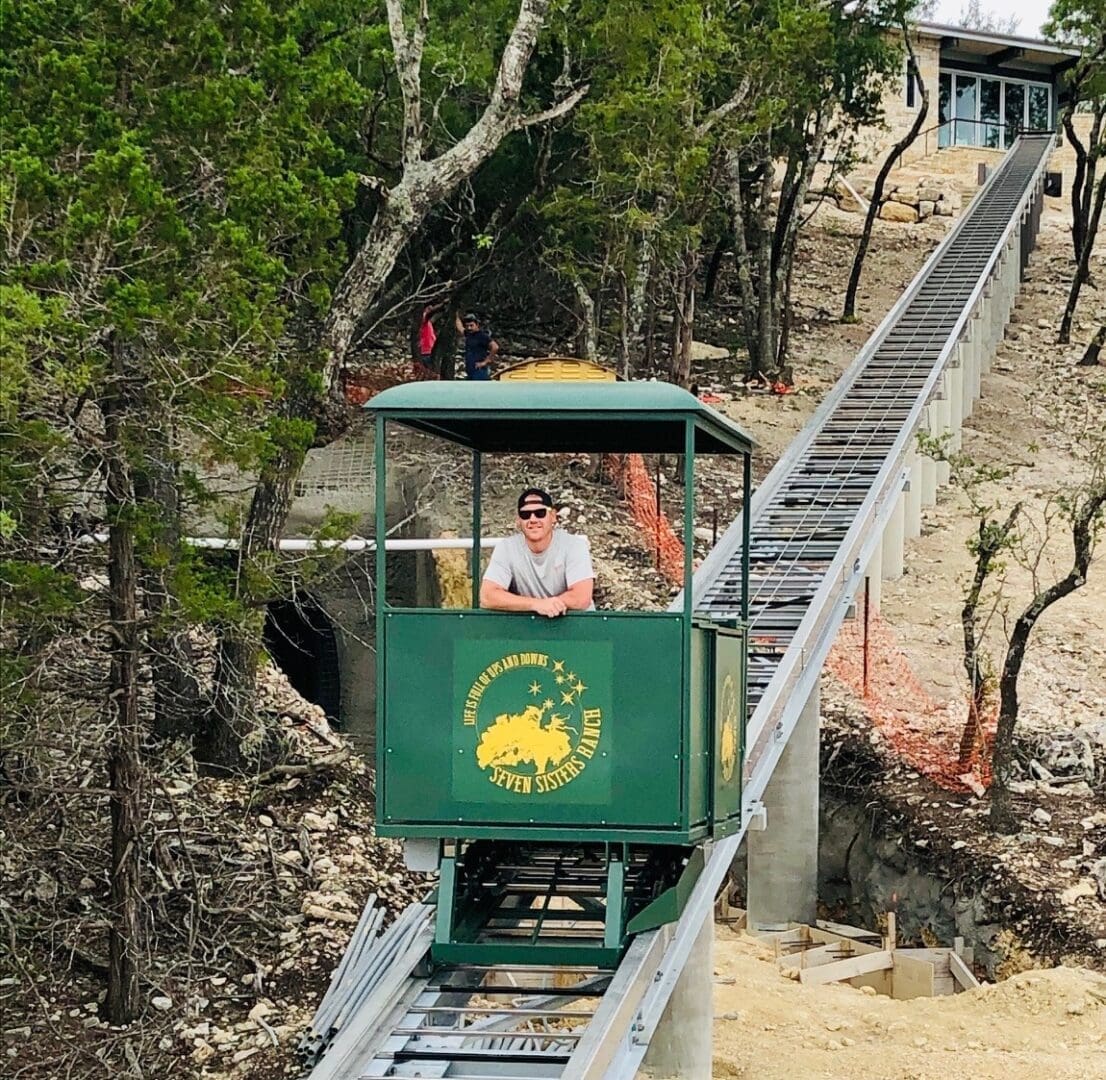
The Climb: From Sweat to Smooth Rides
At 38 degrees or greater, even the strongest professional cyclist won’t be able to ascend a hill. Gravity, the elements, and friction are simply too much. Luckily, today, an individual can kick their feet up and relax as an inclined elevator carries them effortlessly up and down a steep slope. But this wasn’t always the case. Thanks to the innovations of several industries over centuries, we no longer need to rely on sweat and pedal-power to conquer steep terrain. Here is a look at the fascinating history of the hillside lift and the predecessors that made it possible.
The Ancestors: Elevators, Railways, and Gravity Planes
Inclined elevators borrowed brilliant design features from a few historical inventions:
-
Elevators: Elevators have been around for millennia, but modern designs didn’t take shape until the 19th century. Inclined elevators utilize traditional elevator features—most importantly the gearbox, which creates the torque needed to pull the car upward.
-
Railways: From railways, inclined elevators borrowed machine power, tracks, and wheeled carts. While traditional locomotives were built for flat ground (early brakes couldn’t handle steep slopes without wearing down or derailing), inclined elevators and early funiculars adapted the track system to provide extra safety and guidance on extreme grades.
-
Gravity Planes: Inclined elevators save a lot of energy, so it shouldn’t be a surprise that miners were among the first innovators. Early miners used a “gravity plane” to get materials up and down slopes. They used a track with two carts connected by a pulley. By loading the top cart with heavy materials, the downward gravity would effortlessly pull a lighter cart upward.
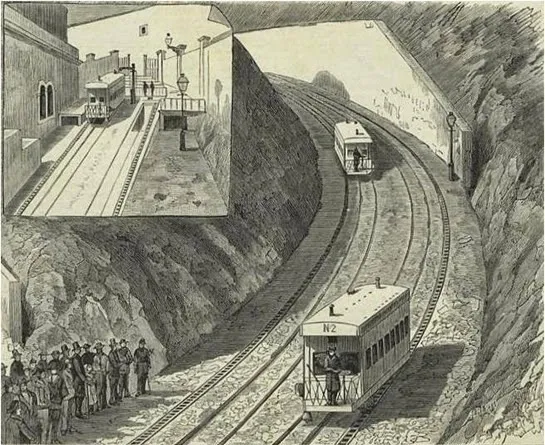
The Earliest Lifts: Muscle and Counterbalancing
Before modern motors were available, the earliest hillside lifts relied purely on muscle and gravity.
-
Muscle-Power: One of the earliest systems, the Reisszug in Austria, carried goods and people to a summit castle. It used a hemp rope for a cable, wooden rails for tracks, and relied entirely on the muscle power of men or animals.
-
Counterbalancing: Drawing inspiration from the miners’ gravity planes, engineers eventually used two counterbalanced carts to move people across tough slopes. They attached two carts via cable, filled the top cart with weight, and let gravity do the heavy lifting of pulling the bottom cart up. Uphill trips became a little bit easier.
The Evolution to Today’s Inclined Elevators
A modern inclined elevator doesn’t rely on muscle power or counterbalancing weights. They are equipped with powerful electric motors. For Hill Hiker®, we tap into main power grids or even utilize solar energy for our remote off-grid hill elevator projects.
Power upgrades aren’t the only improvements. Today’s lifts use galvanized or stainless steel for the tracks, carts, and cables, offering extreme durability and corrosion resistance, often supported by robust concrete beams and pillars.
The Diversity of Modern Systems
Every system we build at Hill Hiker® is unique because no two slopes are exactly the same. Despite this diversity, there are three common drive systems of modern hillside lifts:
-
Winding Drum Systems: Simple and highly reliable, these lifts use a cylinder-shaped drum to coil and uncoil the cable. They are great for aesthetics because the power pack can be hidden beneath the track, though they do require a concrete slab and have length limits (our longest winding drum lift is 505 ft).
-
Continuous Loop Systems: Also known as traction drive systems, these use a drive cable moving in one continuous loop through pulleys. They don’t require a concrete slab (saving money) and make it easier to produce longer tracks. The power pack must be mounted at the top, though clients often hide them in creative landscaping enclosures called “doghouses.”
-
WDX Systems: Our newest innovation, the Winding Drum X, combines the best of both. It uses a drum without needing lower pulleys, and it doesn’t require a concrete slab. However, it is restricted to track lengths of 150 ft. or less.
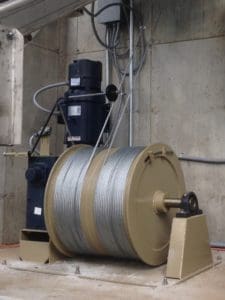
Winding Drum Drive System
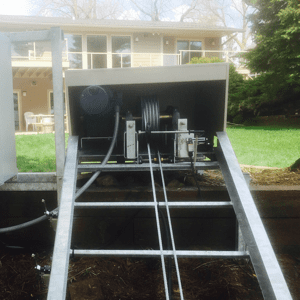
Traction Drive System
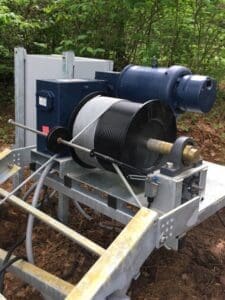
WDX Drive System
Plenty of thought, trial, and centuries of experimentation went into the machines that effortlessly guide us up and down slopes today. For more fun history, with a funicular twist, see our funicular history and facts post. To see some of the latest custom inclined elevators in action, check out our gallery page or consult our team to find the perfect system for your property!